We often hear that libraries are losing relevance in the Internet Age; we have users and funders who say, "why do we need libraries - can't you find most everything online?" While the web has made an incredible amount of information available at our fingertips, libraries continue to play a vital role in communities, both guiding users to find the most useful information and in providing those without Internet access a lifeline to information.
A colleague recently shared this short documentary, Why Libraries Matter that depicts a day in the life of the New York Public Library. While certainly showing a public library perspective, many of these issues translate to academic libraries as well.
Share your comments and consider how you can support libraries in your community.
Showing posts with label libraries. Show all posts
Showing posts with label libraries. Show all posts
6/13/2014


6/10/2013
Stranger than Fiction
(and that can be a good thing)
Some unusual libraries I found while wandering around the internet:
Some unusual libraries I found while wandering around the internet:
 |
| (Via: Gizmodo) |
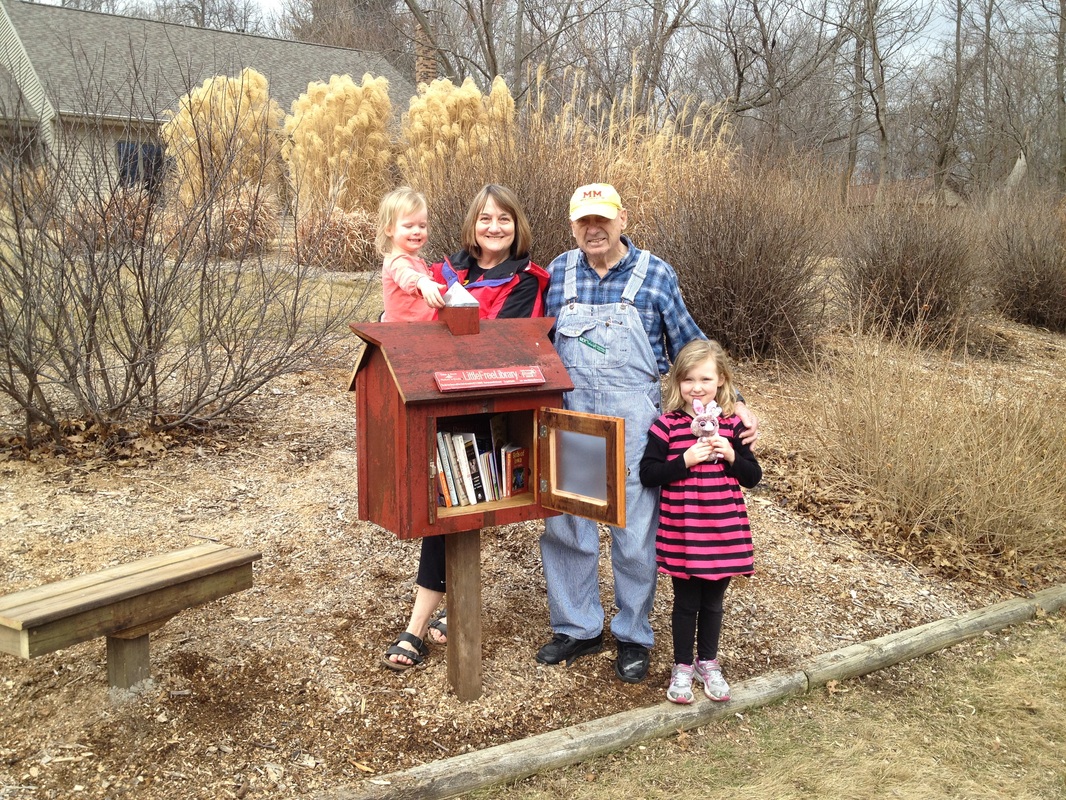 |
| Via: The Little Free Library |
4/01/2013
Finding Inspriration from the Great Library of Alexandria

 |
| The Bibliotheca Alexandrina (photo: Argenberg) |
For this reason, one of the most common questions students
ask at the beginning of the semester is whether Langsdale Library has a copy of their
textbook. In some instances we do have a
copy, but it is usually put on reserve for in-library use since we only
have one copy available. However, in most
cases we do not have textbooks or maybe we only have an older edition, because
we simply cannot afford to buy new editions of every textbook used on
campus while still providing the resources students, staff, and faculty need to
do independent research.
So, what can a library do?
Well, it turns out we have found inspiration in an article by Daniel
Heller-Roazen entitled “Tradition’s
Destruction: On the Library of Alexandria.”
According to Heller-Roazen, one of the ways the Library of Alexandria
became so great was by adopting a rather aggressive collection development
policy. By aggressive, what I really
mean is stealing. Apparently when ships
would visit Alexandria, if there was a scroll on board that the library did not
have, they would simply take it, make a copy and keep the original for
themselves. They would also borrow items
from other libraries, make a copy and keep the originals for themselves.
So, if that worked for the Great Library of Alexandria, why
couldn’t it work for the Great Library of Langsdale? In today’s more enlightened times, we have
laws that prevent us from fully following the Library of Alexandria model. As I am sure you have figured out, the laws to which I am referring are the copyright laws which prevent us from making an unauthorized copy to give back to the original
owner. As a state institution, what we can do is use the doctrine of eminent domain to confiscate books for the general
good of the UB community. Eminent domain
does demand that owners be fairly compensated for their property, however we are pretty sure we can get around
that by merely offering a credit towards any fines the textbooks' original
owners may incur during their stay at UB.
So this summer we will start a pilot
program where, for the first few weeks of the semester, we will be checking the
bags of all visitors to Langsdale Library.
If you have a current edition of a textbook that we do not already own,
we will take it and put it on reserve for the class. Don’t worry, you can still read it in the
library. Well, as long as none of your classmates
are using it. Plus you can use your late
fee waiver to keep that book out overnight once or maybe even twice before
having the fines exceed the value of the waiver. So if you are
lucky enough to have your textbook chosen for this pilot program, go ahead and
keep that DVD out a few extra days over the summer, and rest happy in the
knowledge that the textbook you purchased is now going to help the entire
class.
Happy April 1 everyone.
3/20/2013
Putting the library into a MOOC
Massive open online courses or, MOOCs, are a very hot topic in education these days. The general idea behind a MOOC is that
professors teaching a class can put course materials, including instructional content
like videos of lectures, online in such a way that almost anyone with internet
access can follow along. Many colleges and universities have signed up with
companies like Coursera, Udacity and edX
to provide a platform that enables interested people from anywhere in the world
to “take a class.”
The “M” for massive
comes from the opportunity for thousands of students to take one of these courses
at the same time, but it also creates some problems that institutions of higher
learning are only beginning to address. Perhaps
the most obvious issue is convincing students that going to MIT or Harvard or
Stanford is still valuable, even if their classes are available online for
free? Many people argue that simply putting
materials online cannot
take the place of the in-person instruction and assistance that the paying
students receive. Certainly with a large
class, the professor does not have the time to respond to questions and help
every student who might be taking the course online. Sometimes with MOOCs, support comes from
online message boards where the online students respond to each other and
perhaps form subgroups for mutual support rather than hoping the professor might
find the time to address their particular question. It is a very interesting model.
The University of Baltimore is actively exploring the use of
MOOCs. Most notably, this semester renowned
historian and author Taylor
Branch is offering a MOOC based on his newest book The King Years. In addition,
UB is participating in a project being run throughout the University System of
Maryland to study how
content from MOOCs might be integrated into classes.
All this is a rather
long background to the topic suggested by the title of the post: where
does the library fit in with a MOOC? Academic libraries tend to pay for and license electronic content that
could not be made available to thousands of online users who are not paying for
a course. So
what does one do? There are a few
options. If professors rely on their own notes and writings (to which they have
retained the copyright), they can put them online. Perhaps MOOCS will provide momentum to those
wishing to promote open
access publishing models. On many campuses with MOOCs, librarians have
helped to find resources and navigate copyright issues surrounding the
implementation of open online courses where licensed content did not seem a
viable option. For several years now, the primary role of
academic libraries has been shifting away from being curators and repositories of
information to that of being guides for navigating the oceans of information currently
available. If MOOCs continue to gain in
popularity, this shift may continue on at a much faster pace.
11/28/2012
Folk Songs and Light Bulbs
 |
| From Wikipedia |
I'll share just a few quick examples:
- The Library of Congress website: If you've ever been to Washington (and this being Baltimore, there is a pretty good chance that you have) more than likely someone -- a tour guide, a cab driver, a cousin -- pointed this building out to you. It gorgeous (see above). The library does exactly what it says it does: it's the library for congress. So unless you're a representative or senator, or an aid to one or the other, you can't actually check books out of the building. But, there is enough on their website to keep even the mildly curious happy for a while. A few suggestions:
- The American Folklife Center: Here you'll find digital transfers of wax recordings made around the country in the 1930's and 40's (folk songs, sea shanties, field hollers, Native American rituals, etc.), as well as pictures and maps of historical America.
- Alexander Graham Bell Family Papers: This site doesn't have quite as much info, but what it does have I think is pretty interesting: scans of Alexander Graham Bell's journal (containing many preliminary drawings for future inventions), and letters to and from him and his family (including one from Mark Twain, where he (jokingly) berates Bell's father-in-law for telephone service that always seems to cut out when he's practicing his cursing).
9/06/2012
The Wizard and the Great Zeitgeist
 |
| "House of Knowledge" by Jaume Plensa |
Anyone with a cursory interest in current events must feel at times inundated by the constant flow of news and discoveries and new information. It would be a full time job for any one person to keep up with all the revelations of any given sort circulated online. Everything from large, possibly world changing events – like the Arab Spring or evidence of the Higgs Boson (the “God particle”) – to less-than-world-changing revelations, like did you hear Rafalca, Mitt Romney's ballerina horse, lost the Olympics, or that the Orioles have yet to squander their winning record – and that’s to say nothing of the I-wish-that-tree-would-fall-in-a-forest-without-being-heard revelations that are tweeted and re-tweeted from the many TMZ-like sites that populate the web. Save a few controversial exceptions (evolution springs to mind), we accept most of these discoveries and news stories with an unspoken understanding that though it might be true today, tomorrow is another day entirely.
Ideas on truth and accuracy fluctuate as the piles of information grow. It seems we have cultivated an understanding that truth is a matter to be decided later, that we will either take note as we watch the evidence grow or we will quickly forget when another event comes storming along and blows the whole mess somewhere beyond our concern and past the scope of our Yahoo news feed. Without even giving it much thought, we assume that someone else has reviewed and edited all these tiny pieces of info; we trust, intrinsically, subconsciously, that the framework exists to discern truth from fiction and will eventually let us know the verdict. Yet this framework for fact-checking – as vague and large and unclassifiable as it is – breaks down more than we care to imagine. Most of the falsities are quickly forgotten, but others, more than I care to recall, get stuck in the teeth of the Great Zeitgeist, and live, looming over us, as a reminder of how gullible we sometimes are (what religion is Obama again?).
7/10/2012
Rhyming Libraries and Loops
 | |||||
A mobile division of the New York Public Library
|
And, unlike Auster, I’m not sure that I would go as far as to say that these seemingly banal coincidences are linked, or, worse yet, are the harbingers of coming events, directed by the godhead (whomever He or She may be), but I am nonetheless interested in the source of these repetitions. Were they always there and I never noticed them? Do I notice them only because their existence has been pointed out and now I can't help seeking them out everywhere? If so, what else am I missing? Or, is it a sharpening of the eye that, without my knowing why, subconsciously seeks them out and brings them to the attention of my consciousness? If so, why select one object and not another, why one strange tessellation and not one of the other infinite possible varieties?
Here it would be very easy to go all Freudian and indulge in some good old fashioned dissection of the subconscious, complete with reasoned explanations as to the possible meanings behind one objects psychic attention. This would be good fun to write, though probably less fun to read. So I’ll spare you. Suffice it to say that these patterns more than likely have as their origins, not nature or a godhead of any kind, but the strange and stringy world of bridges and connections that is this lump above my shoulders. We (humans), I (me, being a human), make the patterns. But as far as the outside, objective world is concerned, these similarities are just meaningless and haphazard coincidences.
6/05/2012
Graven and digital tablets: new technology at Langsdale
 |
| Langsdale On the Go! kiosk |
It is difficult to disassociate libraries with books. Drive down any main street in the US and chances are you will run across a public library marked with the logo of a silhouetted human-type-figure sitting with an open book; or maybe you’ll see a logo of a book with its pages flapping haphazardly, whimsically, colorfully in the wind, inviting you into its mysteries; or maybe the logo will be of a book lying on its spine, whose pages have spontaneously released a butterfly, or whose pages have nurtured a tree to grow – a tree which, chances are, will have at least one apple hanging from its limbs; etc. etc. You get my point. Logo designers need not even be creative in order to make the public come to this association. If anywhere you see a logo of a book, I’m sure you think “library.”
This is of course understandable. Since the clay tablet and the scroll went out of fashion a few hundred years before Guttenberg, the stock and trade of libraries the world over has been those thin pieces of tree bark smeared with ink and squashed between two thicker pieces of tree bark, covered as they are in cloth or gold or ivory or that annoying protective plastic that crinkles when you open it and seems to hold every piece of dust it ever encountered. But just as the graven tablet and the papyrus scroll have come and gone, the book also appears to be fading into the pages (read ‘digital files’) of history. The nostalgia for the printed book aside, there is little reason to lament the end of the book. The library will survive and so will the transmission of knowledge and ideas. It will just look different.
And as an academic library, we are involved in shaping how this transition to digital will look. In addition to bolstering our collection of eBooks, we have been developing new ways to search and find the document (digital, paper, or otherwise) that you may be looking for. One of the new ways that you can peruse our collection is by way of our Langsdale On the Go! app. This can be saved onto your phone or iPad, and can be used to search for a book, ask a librarian a research question, find an available computer, or get hints on research strategies, among other things. In the spirit of unending progress -- from stone tablet, to scroll, to book, and back, in a way, to tablet – we are releasing the app in a beta format and ask students and staff to let us know if anything comes up short of your expectations. And while it is still a work in progress, all of the functions listed above are currently functional.
If you don’t have an iPad, or left it at home, you can use one of our iPad kiosks soon to be located throughout the building. These will allow you to do everything you can do on your own device, without lugging it all the way to class.
As time goes on, libraries and archives will look very different than they do right now. And these new developments in technology at Langsdale may just show the difference from where libraries began, to where they will surely go.
1/18/2012
Blackout Today - SOPA, PIPA

Wikipedia and other websites are conducting a blackout today to protest the Stop Online Piracy Act (SOPA) and the Protect IP Act (PIPA). Find out more about these two anti-piracy bills being considered by Congress. More information about these bills is available from the Legislative Panel of the Maryland Library Association.
Subscribe to:
Posts (Atom)