Showing posts with label Internet. Show all posts

10/04/2017

New Print & Ebooks at Langsdale!

Did you know that Langsdale Library offers a list of all of our newest materials? We do! Each month we'll post an update letting you know about a few select titles, but there are far too many to mention here so be sure to check out our comprehensive online list. There is an RSS feed to the list, so you can subscribe and be updated when new materials get listed each month.


New Materials at Langsdale:
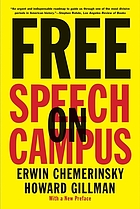


"'Hardly a week goes by without another controversy over free speech on college campuses. On one side, there are increased demands to censor hateful, disrespectful, and bullying expression and to ensure an inclusive and nondiscriminatory learning environment. On the other side are traditional free speech advocates who charge that recent demands for censorship coddle students and threaten free inquiry... This book provides the background necessary to understanding the importance of free speech on campus and offers clear prescriptions for what colleges can and can't do when dealing with free speech controversies'--Book jacket."


The anti-egalitarian mutation : the failure of institutional politics in liberal democracies

"The twin crises of immigration and mass migration brought new urgency to the balance of power between progressive, humanitarian groups and their populist opponents. In the United States and many European countries, the outcome of this struggle is uncertain, with a high chance that the public will elect more politicians who support an agenda of nativism and privatization. The Antiegalitarian Mutation makes a forceful case that those seeking to limit citizenship and participation, political or otherwise, have co-opted democracy."
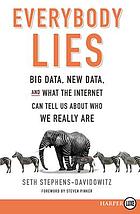


Everybody lies : big data, new data, and what the Internet can tell us about who we really are

Check It Out!


"How much sex are people really having? How many Americans are actually racist? Is America experiencing a hidden back-alley abortion crisis? Can you game the stock market? Does violent entertainment increase the rate of violent crime? Do parents treat sons differently from daughters? How many people actually read the books they buy? In this work, Seth Stephens-Davidowitz, a Harvard-trained economist, former Google data scientist, and New York Times writer, argues that much of what we thought about people has been dead wrong. The reason? People lie, to friends, lovers, doctors, surveys -- and themselves. However, we no longer need to rely on what people tell us. New data from the internet -- the traces of information that billions of people leave on Google, social media, dating, and even pornography sites -- finally reveals the truth. "


These are just a few of the many new books, movies, and games at your Langsdale Library. To see the complete listing of new materials check out our list right here! If you want to receive updates when new materials get listed each month, you can subscribe to the list through the RSS feed.


10/18/2016

How well does Facebook know you?

We've all had that moment when, looking at Facebook, we wonder, "Why am I seeing an ad for that?" Its not often that we get to peek behind the curtain of online advertising and get a glimpse of how companies decide what ads they show us, but this Chrome add-on lets you see what Facebook thinks it knows about you.  Here you'll find a list of preferences and interests that Facebook uses to target ads to you.  If one of the labels doesn't accurately describe you, you can easily delete it from the list.

ProPublica, an online journalism site, put together this Chrome extension as part of a larger series about how online algorithms and big data shape our lives.  Algorithms and big data increasingly affect all of our lives, often insidiously, such as profiling potential criminals or changing online prices based on the buyer's income level, geographic location, or perceived race.  Librarians believe that your privacy is critically important and that you deserve to know what information companies are gathering about you and how that information is being used. Take a moment to use this Chrome add-on and see what Facebook thinks it knows about you!

11/05/2013

When Did You Learn to Code? How About Your Kids?

I read an interesting interview last night with Christopher Poole. He also goes by the name moot and is the guy that coded the disposable image-sharing site 4chan. Be careful with that last link, though. While hugely popular, and arguably the source for a lot of today's internet culture (from memes like rage comics and the Picard facepalm, to groups like  bronies and Anonymous) it's, pretty wild west and can be very N.S.F.W.

Picard Facepalm illustration
image credit: Sparky123445
Besides giving us a place for cat jokes and involved discussions on manga, one thing that makes Christopher Poole interesting is that he coded the site when he was just 15. He worked on it in secret, sacrificing sleep and grades, and launched without telling family or friends until years later. Perhaps not the best of strategies for everyone, but it worked well for him.

Then this morning I saw this article, about an initiative in the UK to formally integrate programming into primary school education. It's part of a broader set of reforms that have some claiming it will bring a revolution to education, and others only ruin. Like the education debate here in the US, there are clearly passionate opinions on either side.

What do you think? If we, in the US, really want to push STEM education, and maybe encourage the next Christopher Poole, how early should we introduce formal programming? If you know how to code, when did you learn? When do you want our kids to learn?

10/23/2013

How the Internet Has Impacted Writing

There have been recent posts in the Chronicle of Higher Education's Lingua Franca blog arguing the positive and negative consequences of the Internet on writing. Journalist Clive Thompson, author of the new book Smarter Than You Think: How Technology Is Changing Our Minds for the Better, argues that before the Internet many people stopped writing after high school or college whereas today a large percentage of the population write at least weekly if not daily. Although Thompson admits that the vast majority write horribly and much of what you find online is not worth reading, he believes that the small percentage (he estimates 10%) are incredibly strong writers and they challenge readers and other writers to improve their craft.

Image courtesy of Jason A. Howie
In the second post, Ben Yagoda reflects on a recent essay in The Guardian by novelist Jonathan Franzen, concerning how the Internet (particularly social media) has reduced writing to tweets, which are superficial at best and lack structural integrity. As Yagoda states it, "[the Internet] tends to exacerbate certain unfortunate human tendencies, some of which I find myself succumbing to, even as I learn and find interesting new ways of expression. I’m talking about superficiality, triviality, groupthink, meanness, narcissism, and a short attention span: maybe worst of all, a seeking out of short-term merit badges (clicks, “likes,” comments, retweets, page views) at the expense of complexity and depth" (Yagoda, B. 2013).

What do you think?  We'd love to hear from faculty and students about your thought on how online communication has impacted the quality of writing and the writing process.

8/06/2013

Where Did I Put that Article?

Logo for The Browser
You can find everything online. While this isn't actually true, it sure sometimes feels like it is. Even if you have to pay, which, I mean, come on, who actually pays for stuff online? (We don't need to go into that.) But, even though it feels like there is an article for every interest, a picture for every occasion/mood/event/place, a video for every idle second, a gif of literally every single cat and puppy walking the earth, there isn't always a good way to distinguish the good from bad without wasting a lot of time doing so. Reddit is a "good" (that term is very subjective and open to all kinds of debates) source of gifs, videos, funny pictures, etc. that have been vetted to a certain degree by a very large online community. Essentially, it's a good way to waste the better part of a day not really doing anything.

But articles and interesting content to read can be a bit trickier to find. Wasting your time looking at pictures or gifs online doesn't normally seem all that wasteful (though it defiantly can be) because it takes almost no thought or concentration, and to comprehend any given image takes only a second or two. Unlike articles or stories which take way longer (in most cases) to read, and require much more concentration. Fortunately there are a few places that will read and sort out all the junk for you, giving you a list of what a few editors believe to be the best content on the web for that day or week:
The Browser: This one is my favorite.They scavenge the internet's vast, information clogged [insert space/byway metaphor here]* so you don't have to. Almost everything I've read from this site has been worth my time. And they have a good variety of of topics; everything from politics to science to big Scottish guys throwing really heavy things in the air to show how big and Scottish they really are.

Longreads: Very similar to The Browser, but with more search refinement tools so you can zero in on exactly what you're in the mood to read.

McSweeney's Internet Tendency: This site is not like the others. It does not scour the internet for content, but instead posts short, mostly funny little tidbits that are a great way to blow off a little steam at the end (or in the middle of) a rough day.


*'Highway' is typically used, as in 'the information super highway,' which in 2013 seems a little dated and wrong. In my more pessimistic moods 'sewer' seems more apt, if slightly Luddite-ish and cranky. In an effort to find some common ground between the two, maybe a better metaphor would be 'the information super dollar store.'

1/14/2013

Information wants to be expensive.

flickr user nirak
In the late 60's, Stewart Brown posited that information wants to be expensive and free at the same time. That the tension between these competing desires will not go away, they will always fight one another. This continues to be true, and Aaraon Swartz, the young co-founder of reddit found dead in his apartment on Friday, is yet another casualty in that conflict.

To some degree this post is one of those tangential “I was there” articles that come up when some tragedy occurs. I was working on my Library Science masters degree in Boston, and had a staff position as the Stacks Manager for the Architecture and Urban Planning library at MIT, when Aaron hacked us for a bunch of JSTOR articles. At the time the MIT libraries community seemed amused, and the vendor was satisfied when he turned the files over to them.

The Department of Justice, however, went on to press charges. With an attitude characterized by some as a witch hunt, they sustained pressure on Aaron Swartz for what amounted to exploiting a loophole to check out too many books. They continued until, just this past Friday, a truly great man took his life under the relentless threat of decades in prison.

Why call Aaron Swartz a great man? Among many other accomplishments, he helped invent the RSS protocol that brings you this blog, and updates many of your favorite websites. He, as mentioned above, helped found reddit.com, "the front page to the internet," a site that even the President of the United States uses. Aaron worked on the Creative Commons License that lets people freely share their artistic work while keeping their ownership of it. He also founded Demand Progress, which galvanized the public to demand the defeat of SOPA/PIPA, which would have hobbled how we share content on the internet.

He also was a huge ally of libraries, someone who really got what we’re about. Aaron was a founding force behind open access online library, Openlibrary.org. One that sought to have a wiki page for every book, and share its data with anyone in the world. And he fought against the great paywall database vendors put up to keep information out of the hands of the people who can use it, in favor of those who can pay for it.

Information wants to be free, because it’s the nature of people to share. It also want to be expensive because individuals can make resources valuable by keeping them scarce. But you can help break that tension. If you are in the position to publish your research, think about making it available in an Open Access forum or under a Creative Commons license. There is a wide community of scholars who could benefit from your ideas, but who may not be able to access them otherwise.

9/12/2012

Information Literacy is more important than ever

I was listening to Morning Joe on MSBNC this morning as they reported and commented on the death of US Ambassador to Libya, Christopher Stevens, at the US consulate in Benghazi on Tuesday. Protesters in both Libya and Egypt have attacked the consulate and embassy in reaction to an amateur video that was promoted online by Terry Jones -- a Florida preacher who set fire to the Koran in 2011, sparking protests in Afghanistan.


Visit NBCNews.com for breaking news, world news, and news about the economy

On the program, frequent guest and commentator Donny Deutsch made this statement (at 4:50 in the video), "What terrifies me in the next 10-20 years [is] how international events will be triggered by what I call the dark underbelly of the Internet and that the average person....cannot distinguish information they are getting from mass media versus just some idiot in his white boxer briefs in the basement. And we will continue to see horrific events as an unfortunate residue of the brilliance of technology and now the underbelly." Tina Brown, editor-in-chief of Newsweek, added that this is not something that can be legislated.

We often hear that students don't need to learn research skills anymore when "every thing is on the Internet."  I counter that it is because so much is available online that students need to develop critical thinking skills and learn to evaluate what they see and hear on the Web to be more discerning consumers and citizens.  Information Literacy teach students these critical skills in the information age.

5/09/2012

Open Data Applications

Hi! I'm Pete Ramsey, one of the Reference and Instruction librarians at Langsdale Library, and I also teach the Information Literacy (IDIS 110) course in first-year student learning communities.

In my course, I like to include a segment where students demonstrate an interesting web site or web-based tool that relates to information literacy. I saw some interesting (and occasionally controversial) demos this semester, including these two:

Avoid Ghetto Patent ApplicationMicrosoft's "Pedestrian Route Production" Mobile App 

Sometimes called the "Avoid Ghetto" app, this tool recommends walking directions based on weather, crime statistics, and population demographics. The app has received a lot of attention, due in large part to protests from civil liberties organizations, which claim that it highlights social discrimination and drives away potential business from the neighborhoods that need the most attention.


Baltimore Sun's Homicide MapThe Baltimore Sun's Homicide Mapping Website 

This site, not-so-affectionately called the "Baltimore Death Map," shows a map of Baltimore homicide victims as far back as 2007. Clicking on a pin shows the victim's name, age, gender, race, cause of death, and a link to any Sun articles about the homicide. A bit disturbing, I suppose, but an intriguing way to reveal the darker side of living and dying in Baltimore.

About the Open Data Movement

Both of the above tools demonstrate intelligent use of information made available by "open data" practices. The idea behind open data is to provide certain statistics and data freely for people to use without worrying about violating someone's intellectual property restrictions. A lot of governments and cities are providing this kind of data, and app and web developers are making really interesting reports and tools.

Baltimore's Open Data 

Baltimore city has two top-notch open data projects. There's OpenBaltimore with its goal of providing "access to City data in an effort that supports government transparency, openness and innovative uses that will help improve the lives of Baltimore residents, visitors and businesses" (Hint: recently got a parking citation? Look it up here). There's also the VERY nice CityView map, which offers various base maps of the city and numerous data layers (for example, you can see a sobering map of the many vacant buildings).
OpenBaltimore Logo

2/23/2012

New technology at Langsdale


Printing Press circa 1811; Deutsches Museum Munich, Germany

Technology has become a part of our everyday lives. With the growing desire for faster and easier technology, the staff at Langsdale is always striving to keep up with the latest technologies.

Here are a few of the newest technologies available at Langsdale:
Slingbox: The library has found a novel use for something really designed for personal use, called Slingbox. The service is supposed to let you stream to your PC or Mac what is currently playing on your TV at home. We use it to let you watch one of our Reserve DVDs from home!

My Account: You can monitor what you’ve borrowed from the library, as well as get information on books you’re waiting to receive.

E-reserves in Sakai: Get all your class e-reserves without leaving Sakai.

Research Help: Have a question about an upcoming paper? No problem, students can chat with a librarian from anywhere on campus or from home.

Borrowing Laptops: You can now borrow a Lenovo laptop or netbook for a few hours. Instead of lugging around your laptop, you can simply check-out a laptop and find a space where you’re comfortable and return when finished.
New technologies coming to Langsdale:
Mobile Printing: You’ll soon be able to print from your smartphones! If you’ve typed notes or need to print out directions, you’ll be able to print and go.

Smartphone Apps: Soon you might have the option of searching the catalog, renewing your books, checking computer availability, reserving a group study room, or even accessing your course reserves from an application on your cell phone!

9/19/2011

Creator of World Wide Web is now trying to measure its size

Will we ever know how many pages are on the World Wide Web?

Google surpassed the trillion-page mark in its index three years ago (Google, 2008), and this doesn't count the deep web that its search engine doesn't index?

With millions of bloggers, amateur videographers, photographers and other web authors adding content by the minute, is it possible to measure the ever-growing Web?

Well, the man considered the creator of the Web, Tim Berners-Lee, is ready to try! His World Wide Web Foundation is launching a project called the World Wide Web Index with a $1 million grant from Google (World Wide Web Foundation, 2011). Its goal is to measure the size and impact of the Web in a series of annual reports. The first report is scheduled for early 2012.

It will be interesting to follow this project to see if society can track the growth and development of the Web. Tim Berners-Lee would like to do more to manage it - we'll see if this is the first step in that direction.