Showing posts with label politics. Show all posts

10/04/2017

New Print & Ebooks at Langsdale!

Did you know that Langsdale Library offers a list of all of our newest materials? We do! Each month we'll post an update letting you know about a few select titles, but there are far too many to mention here so be sure to check out our comprehensive online list. There is an RSS feed to the list, so you can subscribe and be updated when new materials get listed each month.


New Materials at Langsdale:
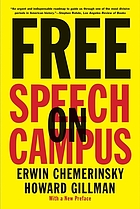


"'Hardly a week goes by without another controversy over free speech on college campuses. On one side, there are increased demands to censor hateful, disrespectful, and bullying expression and to ensure an inclusive and nondiscriminatory learning environment. On the other side are traditional free speech advocates who charge that recent demands for censorship coddle students and threaten free inquiry... This book provides the background necessary to understanding the importance of free speech on campus and offers clear prescriptions for what colleges can and can't do when dealing with free speech controversies'--Book jacket."


The anti-egalitarian mutation : the failure of institutional politics in liberal democracies

"The twin crises of immigration and mass migration brought new urgency to the balance of power between progressive, humanitarian groups and their populist opponents. In the United States and many European countries, the outcome of this struggle is uncertain, with a high chance that the public will elect more politicians who support an agenda of nativism and privatization. The Antiegalitarian Mutation makes a forceful case that those seeking to limit citizenship and participation, political or otherwise, have co-opted democracy."
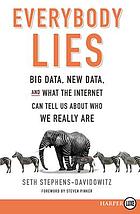


Everybody lies : big data, new data, and what the Internet can tell us about who we really are

Check It Out!


"How much sex are people really having? How many Americans are actually racist? Is America experiencing a hidden back-alley abortion crisis? Can you game the stock market? Does violent entertainment increase the rate of violent crime? Do parents treat sons differently from daughters? How many people actually read the books they buy? In this work, Seth Stephens-Davidowitz, a Harvard-trained economist, former Google data scientist, and New York Times writer, argues that much of what we thought about people has been dead wrong. The reason? People lie, to friends, lovers, doctors, surveys -- and themselves. However, we no longer need to rely on what people tell us. New data from the internet -- the traces of information that billions of people leave on Google, social media, dating, and even pornography sites -- finally reveals the truth. "


These are just a few of the many new books, movies, and games at your Langsdale Library. To see the complete listing of new materials check out our list right here! If you want to receive updates when new materials get listed each month, you can subscribe to the list through the RSS feed.


11/15/2016

Newest Additions to the Archives


Highlights from the Lidinsky Political Campaign Collection at Langsdale

We are pleased to announce the addition of two new archival collections this fall: the Frank Lidinsky Political Campaign Collection and the Betty Garman Robinson Papers on community organizing. Both collections are part of the Baltimore Regional Studies Archives in the library’s Special Collections.

Why were these materials added to the archives at Langsdale? Frank Lidinsky, a 1976 alumnus of the UB School of Law, assembled a truly impressive collection of political flyers, buttons, bumper stickers, and campaign signs that chronicle local politics throughout the second half of the 20th century. These materials have been carefully cared for and organized over time, transforming ephemera—or records created for short-term use, then typically discarded—into a valuable set of visual artifacts from local political history.

Equally valuable to researchers are the records in the Betty Garman Robinson Papers. Robinson’s work as a local community organizer, particularly her work with the Save Middle East Action Committee (SMEAC), is documented in these papers. SMEAC was a grassroots neighborhood coalition of residents in East Baltimore that fought the loss of their homes through eminent domain during the construction of the Johns Hopkins biotech park.

Records like these, which document neighborhood and local political activity, as well as urban planning and redevelopment initiatives, build on the core collection strengths of the Baltimore Regional Studies Archives. The staff of Special Collections has described these collections in our online archival database and we're ready to schedule your research appointment to use these historically significant local research materials!

8/12/2016

Helen Delich Bentley: Farewell to a Firebrand

Former Congresswoman Helen Delich Bentley
Langsdale Special Collections is crestfallen to hear of the passing of feisty former Maryland Congresswoman Helen Delich Bentley. Many remember Mrs. Bentley as a tireless advocate for the Port of Baltimore; a seasoned journalist-- where she covered maritime for the Baltimore Sun and WMAR-TV; and a trailblazer for women in politics and in media (the beats she covered-- labor and the waterfront--  were hardly the norm for female journos of the era).

3/04/2015

Roots in the Road Fights

Photo credit: NASA/Goddard Space Flight Center/Bill Hrybyk

"Mikulski's legacy starts with the 'battle of the road.'" That's the Baltimore Sun headline that caught my eye on the iPad this morning. Columnist Dan Rodricks highlights the roots of Senator Barbara Mikulski's political career in Baltimore's expressway fights of the 1960s and 1970s.

According to Rodricks, "There are a lot of parts to the Mikulski legacy. But the one Baltimore long-timers remember -- and newcomers should know and appreciate -- was the fight against the highways, way back when."

Want to know more about the road fights? You're in luck, because Langsdale Library contains the archival records of two of the grassroots organizations that fought expressway construction through their neighborhoods: Southeast Council Against the Road (SCAR) and Movement Against Destruction (MAD).

Check out our digital exhibit, which highlights selected material, or browse the collections as they've been scanned in their entirety: MAD and SCAR.

Want to learn more? Contact Special Collections or make an appointment to view the collections in person.